
Cold Water Went From Niche to Everywhere
A few years ago, ice baths were something you saw at elite sport facilities. Now cold plunges are sold as home appliances, cold showers are recommended as a morning routine, and the internet credits cold water with everything from faster recovery to better mood to longer life.
In this guide
Some of that is real. Some of it is enthusiasm outrunning evidence. This guide separates what cold water reliably does from what it doesn’t — so you can decide whether it’s worth the discomfort.
What Cold Water Actually Does
The most consistent effects of cold water immersion are on how you feel, and on some markers of recovery after hard exercise. Specifically:
- Reduced perception of soreness. Many people report feeling less sore after cold water, which is a real and useful effect even if the underlying physiology is partly about sensation.
- Reduced swelling and inflammation markers. Cold constricts blood vessels, which can reduce swelling after intense exercise. Short-term markers of inflammation tend to drop.
- An alertness boost. Cold water triggers a strong nervous-system response that most people experience as feeling awake and focused. This is one of the most reliable effects.
- A mood lift, for some. Many people report feeling better after cold exposure. The mechanism isn’t fully understood and the effect varies.
Where the Claims Get Ahead of the Evidence
Cold water is frequently credited with more than the evidence supports. It’s worth being skeptical about:
- “It speeds recovery.” Cold water can reduce the feeling of soreness, but it doesn’t clearly accelerate muscle repair or make you stronger. Some research suggests it may actually blunt certain strength adaptations when used right after strength training — which is worth knowing if building muscle is your goal.
- “It burns lots of calories.” Cold exposure does increase energy expenditure, but the amounts involved are small and easily undone by a snack. It’s not a weight-loss strategy.
- “It boosts immunity.” Some studies suggest cold-water habitués report fewer sick days, but the evidence is mixed and the effect modest at best.
- “It will transform your mental health.” Many people find cold exposure helps their mood, and that’s worth having. But it’s not a treatment for depression or anxiety, and should never replace proper care.
- “Longer and colder is better.” More isn’t better here. Beyond a point, the benefit plateaus and the risk of harm rises.
The Training Trade-Off Nobody Mentions
If your goal is muscle growth or strength, there’s a genuine conflict worth understanding. Cold water after strength training may reduce inflammation — but inflammation is part of the signal your body uses to adapt and grow stronger. Blunting it can mean adapting less.
Practically, this suggests:
- If you’re training for muscle and strength, consider saving cold water for days when you’re not chasing adaptation, or simply avoid it right after your hardest sessions.
- If you’re training for competition or performance, where recovering fast for the next session matters more than maximum adaptation, cold water can make sense.
- If you just enjoy it, that’s a legitimate reason to do it. Just know what it is and isn’t doing.
Cold Showers vs Ice Baths
They’re different tools with different intensities.
- Cold showers are accessible, low-risk for most people, and easy to fit into a daily routine. They’re a reasonable way to get the alertness effect and to practise tolerating discomfort. Their recovery effect is milder.
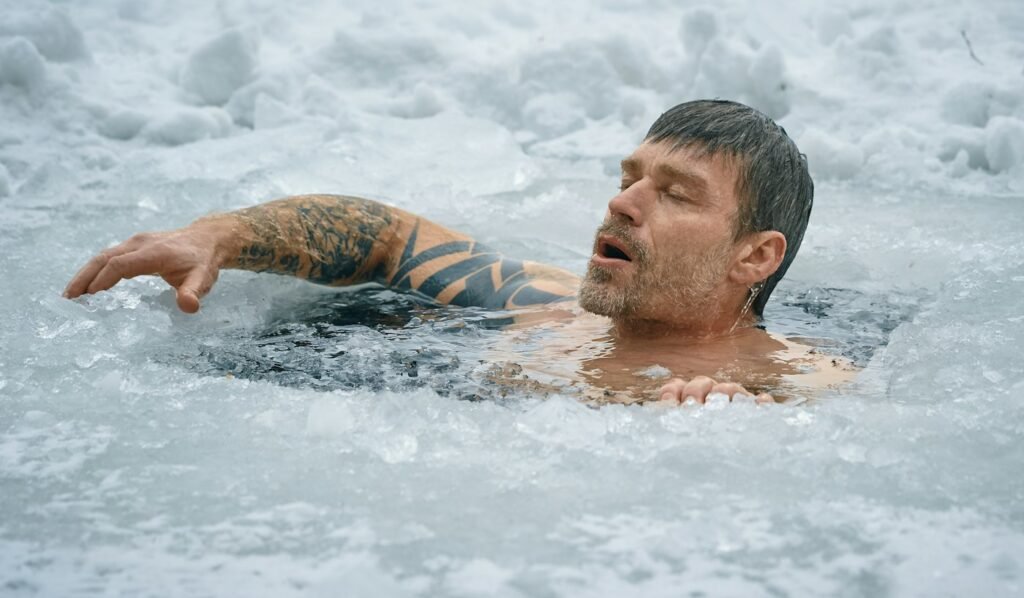
- Ice baths and cold plunges are colder and more intense, and are the version most studied for recovery. They require more commitment, equipment or access, and carry more risk of cold-related problems.
For most people, a cold shower is the practical starting point. Move to immersion only if you have a specific reason and can do it safely.
How to Do It Safely
Cold exposure carries real risks, and the risks are higher for some people. Follow these basics:
- Start with cold showers, not immersion. Build tolerance gradually. Finish a normal shower with 30 seconds of cold, then extend over time.
- Keep sessions short. For showers, 30 seconds to a few minutes is plenty. For immersion, start well under a minute and build slowly. Longer isn’t better.
- Never do it alone in water. Cold water immersion can cause involuntary gasping and, in rare cases, cold shock that impairs your ability to swim or get out. Never plunge alone, and never in open water without supervision.
- Don’t jump in at extreme temperatures. Very cold water increases the risk of cold shock. Work down gradually.
- Get out if you feel wrong. Numbness, severe shivering that won’t stop, confusion, or a feeling of weakness are all signals to stop and warm up.
- Warm up properly afterward. Dry off, put on warm clothes, and let your body temperature return to normal gradually. Don’t go straight into more cold.
Who Should Avoid Cold Water
Cold water immersion is not appropriate for everyone. Talk to a doctor before starting if you have any of the following:
- A heart condition or history of heart problems
- High or uncontrolled blood pressure
- Circulation problems, including Raynaud’s phenomenon
- Diabetes, particularly with nerve or circulation issues
- Asthma or a history of cold-induced breathing problems
- Pregnancy
- Any condition where cold exposure could trigger symptoms
If you’re generally healthy, the risk is low — but it isn’t zero, and the consequences of a bad reaction in water can be serious. Treat it with respect.
A Reasonable Way to Use It
If you want to try cold water, a sensible approach:
- Start with a cold shower finish. Thirty seconds at the end of your usual shower. Do this for a week or two.
- Extend gradually. Add 15–30 seconds at a time, and stop where you’re comfortable. Two to three minutes is a generous ceiling for a shower.
- Breathe through it. The hardest part is the first 15 seconds and the instinct to gasp. Slow, controlled breathing helps.
- Use it deliberately. After hard training for performance, in the morning for alertness, or whenever you want it — just have a reason.
- Don’t rely on it for recovery. Sleep, food, hydration, and sensible training loads matter far more than any cold water.
Frequently Asked Questions
Do ice baths actually help recovery?
They can reduce the feeling of soreness and some short-term markers of inflammation after hard exercise. Whether that translates into better performance over time is less clear. They’re useful for some goals and can actually work against muscle-building adaptation if used right after strength training.
How long should I stay in an ice bath?
Shorter than most people assume. Beginners should start well under a minute and build up gradually. There’s no benefit to heroically long sessions, and the risk of cold-related problems rises the longer you stay. Never do it alone.
Are cold showers as effective as ice baths?
They’re milder in every way — less cold, less of a recovery effect, but also lower risk and easier to sustain. For most people, a cold shower is the sensible starting point; immersion is a step up for those with a specific reason.
Can cold showers help with weight loss?
They increase energy expenditure slightly, but not nearly enough to matter for weight loss on their own. Fat loss depends mainly on overall energy balance and consistent activity. Cold exposure is not a shortcut.
Should I do cold water right after lifting weights?
If building muscle is your priority, it’s worth avoiding immediately after strength training, since cooling may blunt some of the adaptation response. Save it for other times, or for periods when fast recovery matters more than maximum muscle gain.
Is it safe every day?
For most healthy people, daily cold showers are fine. Daily ice baths are more demanding and carry more risk, particularly if done alone. If you have any cardiovascular, circulatory, or respiratory condition, check with a doctor first.
The Bottom Line
Cold water is a genuinely useful tool for feeling alert and, for some people, for managing soreness after hard training. It is not a cure-all, it won’t burn meaningful calories, and it can work against muscle growth if used at the wrong time.
Start with cold showers, keep sessions short, build gradually, never plunge alone, and treat any health condition as a reason to check with a professional. Used sensibly, it’s a small, pleasant addition to a routine — not the foundation of one.