
Two Tools, Two Different Jobs
Once you’ve covered bands and a pull-up bar, the next question in almost every home gym is the same: dumbbells or kettlebells?
In this guide
The honest answer is that they’re not really competitors. They train overlapping things in genuinely different ways, and the right choice depends on what you actually plan to do. But since most people buy one first, it’s worth understanding what each is good at before you spend money on the wrong thing.
The Short Version
- Dumbbells are better for classic strength training: controlled reps, isolation work, bodybuilding-style training, and exercises where you want to think about one muscle at a time.
- Kettlebells are better for dynamic, whole-body movements: swings, cleans, and anything where you generate force rather than move slowly.
- For most home trainees starting out, dumbbells are the more flexible first buy. But if your goal is conditioning and explosive movement, a kettlebell is the better single purchase.
The rest of this guide explains why.
How Dumbbells Train You
A dumbbell is a simple mass with a handle. It doesn’t ask anything special of you — you pick it up and move it however the exercise requires. That simplicity is exactly its strength.
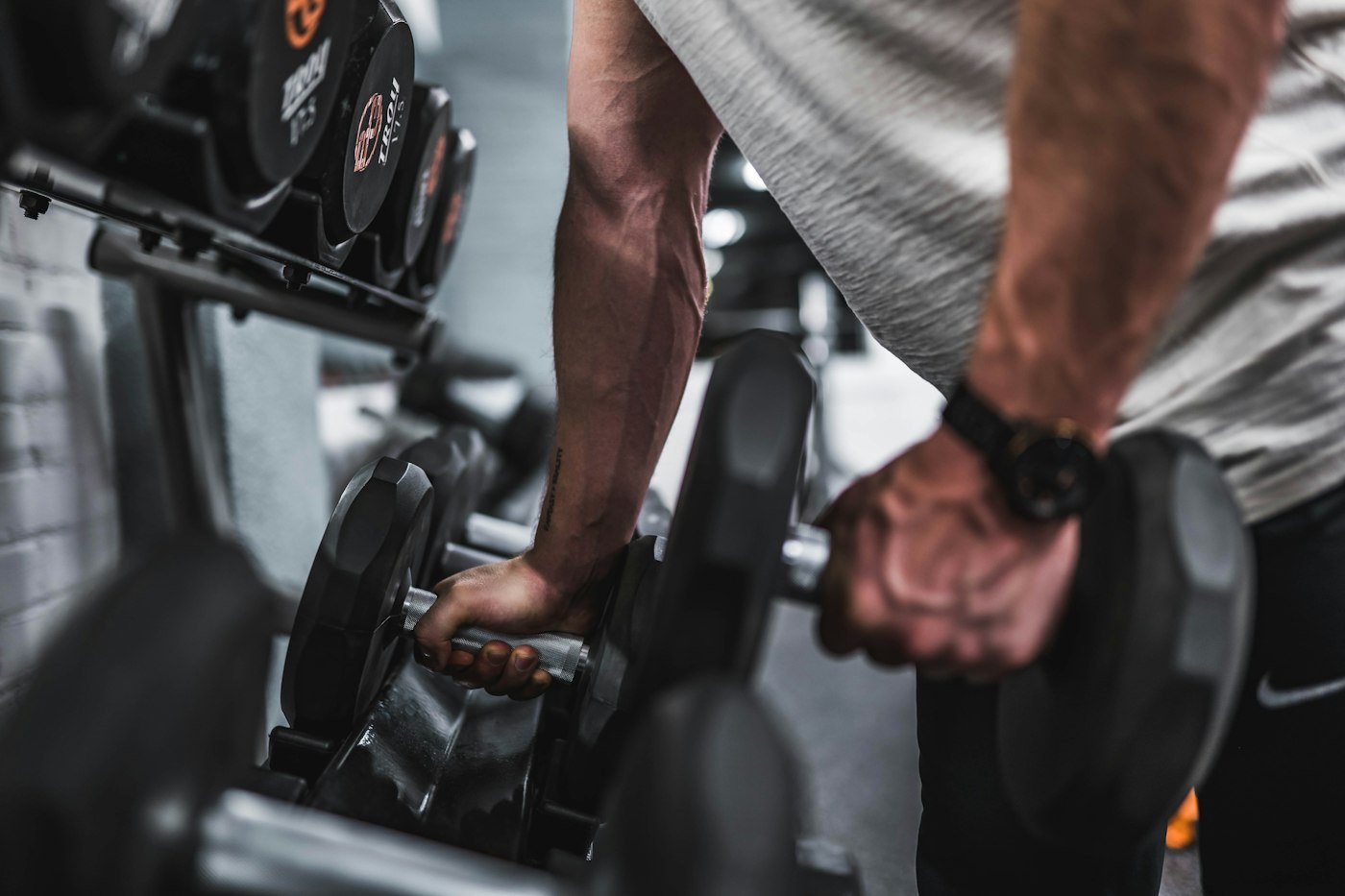
- Independent sides. Because each arm or leg works on its own weight, dumbbells expose and correct left-right differences that a barbell can hide.
- Natural movement paths. Your joints aren’t locked into a fixed bar path, so pressing and rowing with dumbbells often feels easier on the shoulders.
- Easy to scale. Need more resistance? Grab the next weight up. Progression is obvious and precise.
- Huge exercise range. Rows, presses, curls, lunges, Romanian deadlifts, goblet squats, triceps work — the list is very long.
The main limitation is that heavy dumbbells get expensive and take up a lot of floor space. Adjustable versions solve the space problem at the cost of a bit of convenience.
How Kettlebells Train You
A kettlebell has an offset center of mass — the weight hangs below your hand rather than being balanced in it. That single design difference changes everything about how you use it.
- Ballistic movements. The swing, clean, snatch, and high pull rely on hip drive and a rapid transfer of force. That’s hard to replicate with a dumbbell.
- Grip and forearm demand. The offset load works your grip and forearms far more than a balanced weight of the same size.
- Conditioning and power. Because many kettlebell movements are rhythm-based and repeatable, they double as cardiovascular work.
- Compact for the weight. A kettlebell takes up less space per unit of weight than a dumbbell of the same load.
The catch is that kettlebell technique matters a lot. A swing done with the arms instead of the hips isn’t conditioning, it’s a lower-back risk. If you buy a kettlebell, plan to learn the basic hinge and swing pattern properly before loading it heavily.
Head-to-Head Comparison
Strength and muscle building
Both build strength and muscle. Dumbbells are generally easier to use for controlled, hypertrophy-focused training because you can adjust weight in small steps and isolate muscles cleanly. Kettlebells build strength well too, but the jumps between sizes are often larger, and the most effective movements are more skill-dependent.
If your priority is size and controlled strength, dumbbells have the edge. If it’s explosive power and usable athleticism, kettlebells do.
Versatility
Dumbbells win clearly. Almost any kettlebell movement has a dumbbell equivalent, but the reverse isn’t true — there’s no good dumbbell version of a proper two-hand swing. If you can only own one, dumbbells offer more total options.
Space and storage
Kettlebells are more space-efficient for the load they carry. A pair of heavy dumbbells occupies more room than a kettlebell of similar weight. If you’re training in a small apartment, that matters.
Adjustable dumbbells change this calculation — one pair can replace a whole rack — but they’re a bigger upfront cost and a bit slower to change between weights.
Cost per unit of usefulness
This depends heavily on what you’d actually use. A single mid-weight kettlebell will cover swings and conditioning for a long time, which makes it excellent value for that purpose. A pair of adjustable dumbbells covers far more exercises, which makes them better value for general strength work.
Neither is universally cheaper. Think about which one you’ll genuinely use three times a week, and buy that.
Learning curve
Dumbbells are more forgiving. Most exercises are intuitive, and the risk of getting it badly wrong is low. Kettlebells reward good coaching — the swing, clean, and snatch all have technique that matters for both results and safety. Expect to spend a few sessions learning rather than loading.
Injury considerations
Neither tool is inherently dangerous; both can be used badly. The common kettlebell mistake is muscling a swing with the arms and lower back. The common dumbbell mistake is going too heavy on a movement you can’t control, or training one side much more than the other.
If you have an existing back, shoulder, or wrist issue, get a professional assessment before adding either — and start lighter than you think you need. This guide explains how the tools differ, not what’s right for your body.
What About Buying Both?
If your budget and space allow, they complement each other well: dumbbells for controlled strength work and a kettlebell for conditioning and power. Many home setups eventually end up with a pair of adjustable dumbbells and one or two kettlebells.
But if you’re starting on a tight budget, buying one decent tool is better than buying two poor ones. You can always add later.
How to Decide
Work through these questions:
- Do I want to do swings, cleans, and snatches? If yes, you want a kettlebell.
- Do I want to train each muscle in a controlled way, with small weight jumps? If yes, dumbbells.
- Am I short on space? A kettlebell goes further per square foot unless you choose adjustable dumbbells.
- What will I actually do three times a week? That’s the deciding question, and it’s usually answerable.
- Do I want to learn a skill, or just train? Kettlebells ask more of you; dumbbells let you start immediately.
If you’re still undecided and want maximum flexibility from one purchase, dumbbells are the safer bet. If you already know you love conditioning and dynamic movement, go kettlebell.
For a bigger picture of what to buy and in what order, see our guide to home gym essentials. If you’re still filling in the basics, our look at resistance bands covers the cheapest useful addition to either setup.
Frequently Asked Questions
Can I replace dumbbells with kettlebells?
For some exercises, yes — goblet squats, rows, and presses work with either. But you lose the fine weight progression and easy isolation work that make dumbbells so useful. Most people find kettlebells complement rather than replace dumbbells.
Are kettlebells better for fat loss?
Kettlebell training can be very metabolically demanding, since many movements are continuous and full-body. But fat loss comes mainly from overall energy balance and consistent activity, not from the specific tool. Both dumbbells and kettlebells work fine if you train consistently.
What weight should I start with?
That depends on your experience and the movement. Beginners typically start lighter than they expect, and it’s much better to nail technique with a weight that feels easy than to struggle with one that’s too heavy. Many people own two or three weights rather than one.
Can I build a full workout with just one kettlebell?
Yes. A single kettlebell can support a complete session of swings, squats, presses, rows, and carries. The limitation is progression — once the weight is easy for everything, you either need a heavier one or more complex variations.
Do I need adjustable dumbbells?
Not necessarily, but they’re the most space-efficient way to get a wide range of weights at home. The trade-offs are a higher upfront cost, and a slightly slower change between loads than picking up a fixed pair.
The Bottom Line
Dumbbells and kettlebells aren’t rivals — they’re tools with different strengths. Dumbbells give you more exercises, finer progression, and easier learning. Kettlebells give you power, conditioning, and compact training for the space.
For most people starting a home gym, dumbbells are the more flexible first purchase. If you know you want to train ballistically, start with a kettlebell instead. Either way, one good tool you actually use beats a shelf of equipment you don’t.