
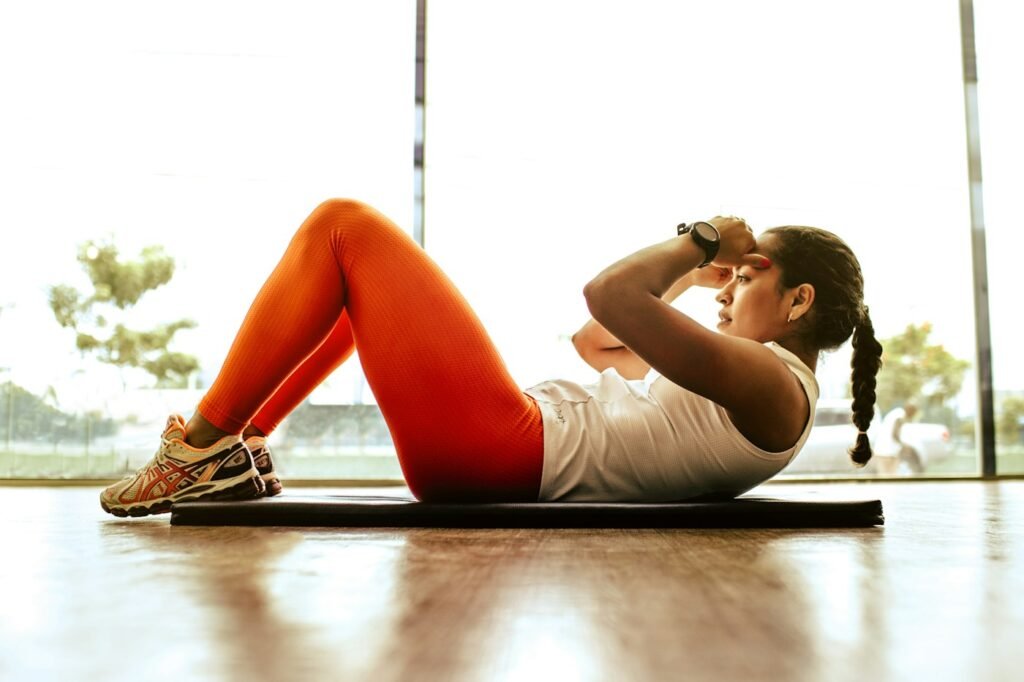
Why Strength Training Is the Most Underrated Thing You Can Do at Home
If you only ever did one type of exercise, strength training would be a strong candidate. It builds muscle, yes — but it also improves how your body handles everything else: walking up stairs, carrying groceries, getting off the floor, staying steady on uneven ground. It raises your resting metabolism, protects your joints, supports your bone density, and makes everyday movement feel easier.
In this guide
- Why Strength Training Is the Most Underrated Thing You Can Do at Home
- What “Strength Training” Actually Means
- The Six Movements That Cover Your Whole Body
- How to Structure Your Week
- How to Progress Without Buying Anything
- How Long Should You Train?
- What Equipment Is Actually Worth It
- Mistakes That Stall Beginners
- Frequently Asked Questions
- The Bottom Line
And it’s the one form of exercise you can do almost perfectly well at home, with very little equipment. You don’t need a gym membership, a rack of dumbbells, or a rack of machines. You need a handful of movements, a floor, and a plan you can repeat.
This guide gives you exactly that: the six movements that cover your whole body, how to structure a week, how to make it harder over time without buying anything, and the mistakes that stall most beginners.
What “Strength Training” Actually Means
Strength training means asking your muscles to produce force against resistance. The resistance can come from your own bodyweight, from a band, from a dumbbell, from a kettlebell — it doesn’t matter much. What matters is that the effort is hard enough to be a real challenge and that you do it consistently and increase it over time.
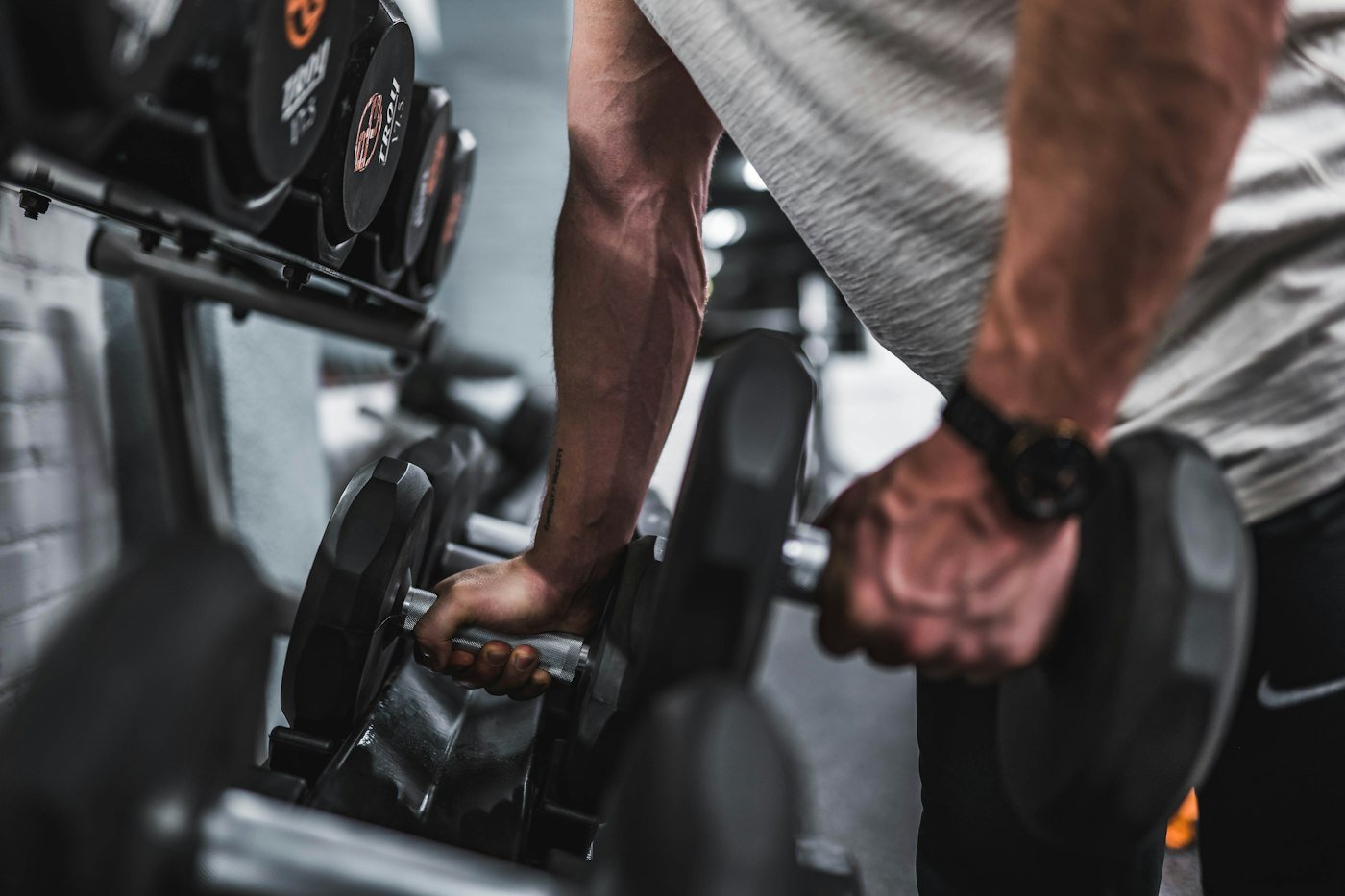
That last part is the whole game. Your body adapts to what you ask of it. If you ask the same thing forever, it stops changing. If you gradually ask for a little more — more reps, more resistance, better control — it keeps adapting.
This is called progressive overload, and it’s the only principle you actually have to understand. Everything else is detail.
The Six Movements That Cover Your Whole Body
You don’t need twenty exercises. You need one from each of six categories, and together they train almost everything that matters.
- A squat pattern — bending your knees and hips under load. Trains quads, glutes, and your ability to get up and down.
- A hinge pattern — bending at the hips with a flat back. Trains hamstrings, glutes, and lower back.
- A push — moving weight away from your chest. Trains chest, shoulders, triceps.
- A pull — moving weight toward you. Trains your back and biceps, and balances out all the pushing.
- A carry or core movement — resisting movement, or holding load while walking. Trains your trunk.
- A single-leg movement — one leg at a time. Trains balance and stability, and exposes weaknesses.
Here’s a beginner-friendly home version of each:
- Squat: bodyweight squat, then goblet squat with a single dumbbell or a filled backpack.
- Hinge: hip bridge, then Romanian deadlift with dumbbells or a band.
- Push: incline push-up (hands on a table or step), progressing to a floor push-up.
- Pull: a band row, or a towel row around a sturdy door handle, or inverted rows under a table.
- Core: a plank, a dead bug, or a farmer’s carry walking with heavy bags.
- Single-leg: a step-up onto a sturdy chair or step, or a split squat.
Six movements, one set each to start, and you’ve trained your entire body in about twenty minutes.
How to Structure Your Week
For a beginner, the simplest effective setup is two or three full-body sessions a week, with at least one rest day between them. Monday, Wednesday, Friday is the classic pattern, and it works because your muscles recover between sessions while your habit stays consistent.
A single session looks like this:
- Warm up: 3–5 minutes of easy movement — arm circles, hip circles, a few slow bodyweight squats. Our 5-minute warm-up routine covers this.
- Main work: one exercise from each of the six patterns. Start with 2 sets of 8–12 reps each.
- Cool down: a few gentle stretches and some slow breathing.
That’s it. No need to complicate it. If you’re unsure how many days to train, our guide on how many days a week to work out goes deeper, but two to three full-body days is the right starting point for almost everyone.
How to Progress Without Buying Anything
This is where most home beginners get stuck. The weights don’t change, so the workouts feel the same, so progress stalls. The fix is to make the exercise harder in ways that don’t require new equipment:
- Add reps. If you can do 12 easily, work toward 15 or 20.
- Slow down the lowering phase. Taking three or four seconds to lower yourself makes the same rep far harder.
- Change the leverage. An incline push-up on a table is easy; the same push-up on the floor is much harder. Move your hands lower over time.
- Add a pause. Pausing for two seconds at the hardest point of a movement removes momentum and increases difficulty.
- Reduce stability. Going from two legs to one, or from a stable surface to an unstable one, raises the demand.
- Add load. A backpack filled with books or water bottles works remarkably well for squats and rows.
The rule of thumb: when you can complete all your prescribed reps with good form and it feels like you have a few left in the tank, make it slightly harder next time. Small increases, consistently applied, are how strength actually builds.
How Long Should You Train?
Longer isn’t better for a beginner. Twenty to thirty minutes of focused work, two or three times a week, is enough to see real changes in the first two to three months. What matters far more is that you show up consistently and gradually ask for a bit more each week.
If you have more time and energy, adding a session is better than making one session enormous. And if life gets busy, doing a shorter version of your session is far better than skipping it. Our guide to 30-minute workouts for busy people shows how to compress a full-body session when time is tight.
What Equipment Is Actually Worth It
You can get a long way with nothing. But if you want to invest, a few inexpensive items go a surprisingly long way:
- A set of resistance bands. Cheap, versatile, and they make pulling movements possible at home — the one pattern bodyweight alone handles poorly.
- One or two dumbbells. A single adjustable dumbbell covers squats, hinges, presses, and rows.
- A sturdy step or low bench. For step-ups, incline push-ups, and split squats.
- A mat. Comfort for floor work, nothing more.
That’s a complete home setup for most beginners, and you can add to it later. If you’d like a fuller picture of what’s worth buying first, our guide to home gym essentials covers the priorities.
Mistakes That Stall Beginners
Chasing soreness instead of progress. Soreness isn’t a measure of a good workout. Getting stronger, moving better, and being able to do more reps are.
Going too hard, too soon. Starting with five sets of everything leaves you wrecked and inconsistent. Start easy, finish wanting a little more.
Ignoring form to add weight. Sloppy reps with more resistance don’t build more strength — they build more risk. Good form first, always.
Changing the routine every week. Consistency is what drives adaptation. Pick six movements and stick with them for at least six to eight weeks before changing much.
Skipping the pull and single-leg work. These are the most commonly skipped and among the most valuable. Don’t leave them out.
Frequently Asked Questions
Can I build muscle at home without equipment?
Yes, especially as a beginner. Bodyweight movements with good form, progressed over time, build real strength. What’s harder without equipment is training your back (pulling), which is why bands, a doorway, or a table are so useful. Once bodyweight work becomes easy, adding a little resistance — a band, a dumbbell, or a loaded backpack — keeps progress going.
How long until I see results?
Most people notice they can do more — more push-ups, easier squats, more control — within three to four weeks. Visible muscle changes typically take eight to twelve weeks of consistent training. Strength is one of the more patient investments, but it’s one of the most lasting.
Is it OK to do strength training every day?
Not the same muscles, no. Strength training creates small amounts of damage that your body repairs and rebuilds stronger during recovery. Training the same muscles hard every day interrupts that process. Alternating muscle groups or training two to three full-body days a week with rest between is the sensible approach.
Do I need to feel sore to know it’s working?
No. Soreness is a poor progress signal — it fades as you adapt, even when you’re getting stronger. Judge progress by performance: more reps, better control, harder variations, feeling steadier in daily life.
The Bottom Line
Strength training at home is one of the highest-return habits you can build, and it doesn’t require a gym or much equipment. Learn six movements, train two or three times a week, and make each week slightly harder than the last. That’s the entire method.
Start today with what you have — a floor, a wall, maybe a band or a backpack. Consistency over weeks will do more for you than any piece of equipment you could buy.