
Two Tools, Overlapping Jobs
Foam rollers and massage guns are both sold as recovery tools, and both promise to relieve tightness and speed up recovery. They’re often marketed as rivals, as if you must choose one or the other.
In this guide
The truth is that they do overlapping jobs in different ways, and the right choice depends on how you’ll use them. This guide compares them on the things that actually matter — and explains the situations where one clearly beats the other.
What They Have in Common
Before the differences, it’s worth being clear about what both tools do and don’t do:
- Both work mostly through the nervous system. The evidence suggests the main effect is a temporary reduction in the sensation of tightness, not a physical change to muscle tissue.
- Both are temporary. Any relief or range-of-motion gain typically lasts minutes to hours.
- Neither fixes the underlying cause. If something feels tight because it’s weak or your movement pattern is off, neither tool addresses that. Training does.
- Both feel good. That’s a legitimate benefit — feeling better supports consistency, and consistency is what changes your body.
Our foam rolling guide covers the mechanisms in more detail. The short version is: neither device is a cure, and both are reasonable comfort tools.
Foam Roller: Strengths and Limits
Strengths
- Cheap. A basic foam roller costs a fraction of even an entry-level massage gun. It’s one of the best value items in home recovery.
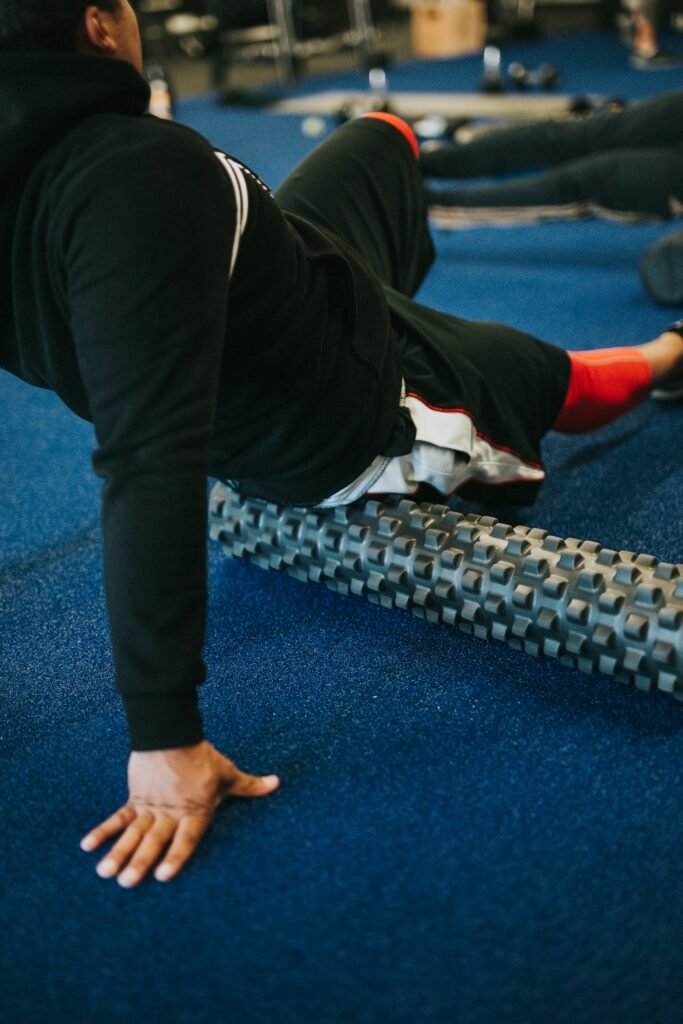
- Broad coverage. Because you use your body weight across a large surface, a roller works over bigger areas — the whole back, both calves, the length of a thigh.
- No batteries, no charging, nothing to break. It’s a lump of foam. It will outlast most things you own.
- Self-limiting. You control pressure with your body weight, which makes it harder to overdo accidentally.
Limits
- Awkward for some areas. Rolling your own upper back, neck, or arms is difficult or impossible on a roller. You simply can’t reach everything.
- Requires floor space and getting down on the floor. That rules it out for some people, or for some moments.
- Pressure is broad, not precise. If you want to target one specific spot, a roller is a blunt instrument.
- Intensity can be hard to control for beginners, who often press harder than they should.
Massage Gun: Strengths and Limits
Strengths
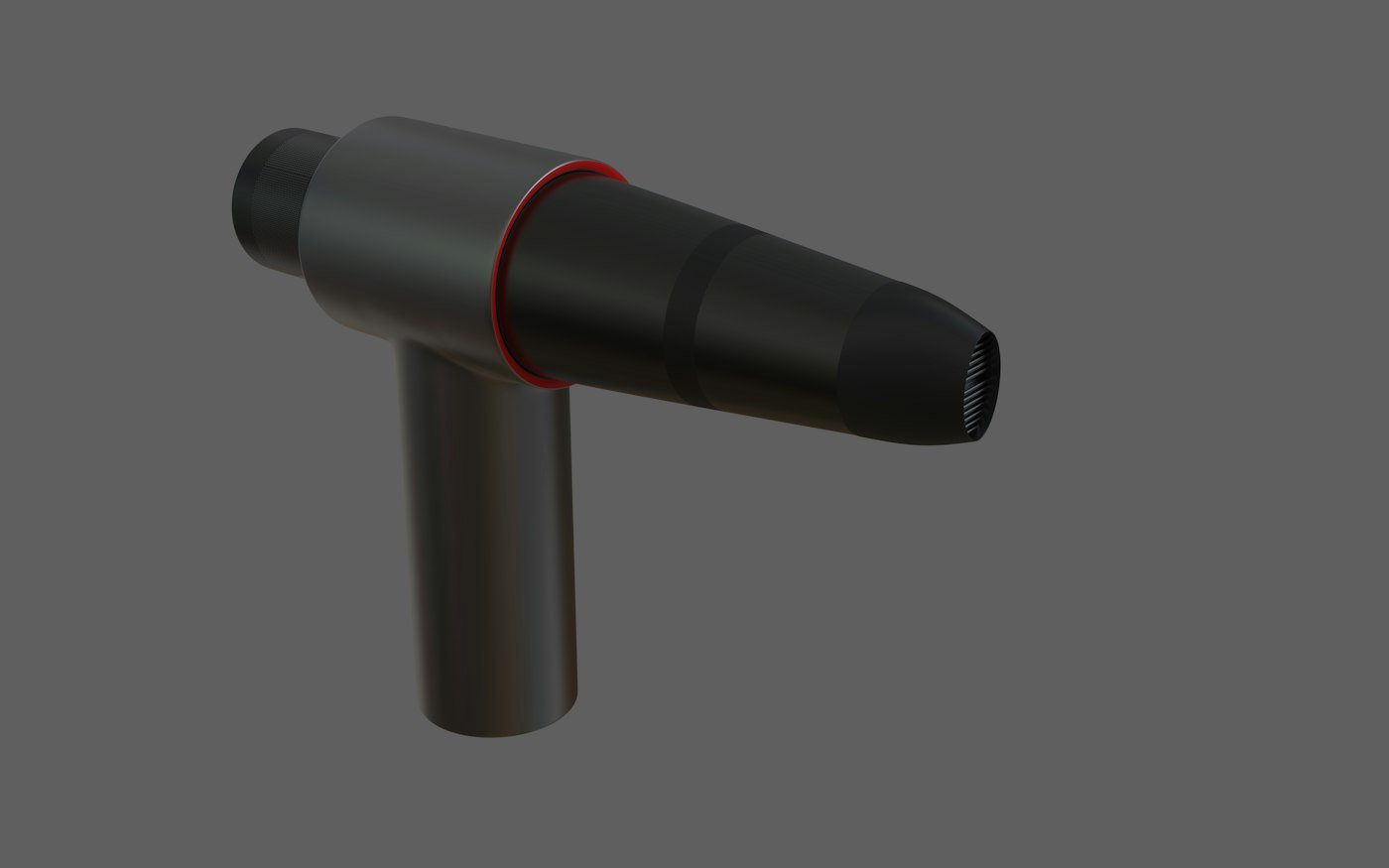
- Targeted. You can point it precisely at one spot, which suits small or awkward areas — shoulders, calves, forearms, the upper back.
- Easy to use anywhere. Sitting, standing, on a sofa, at a desk. No floor required.
- Adjustable intensity. Most have speed settings, so you can dial the pressure up or down precisely.
- Reach. You can use one on areas a roller can’t touch, and reach around your own body more easily.
- Convenient. Turn it on and go — no setup, no positioning.
Limits
- Expensive. Much more costly than a foam roller, and the price range is wide. Our massage gun buying guide covers what actually matters if you go this route.
- Needs charging. Battery life varies, and a dead gun is useless. Another thing to remember.
- Small treatment area. It works on one spot at a time, so covering large areas takes longer than rolling.
- Easy to overuse. Because it’s pleasant and easy to aim, some people use it far more than is useful.
- Can break. It’s a device with a motor, battery, and moving parts. It won’t last as long as a foam roller.
Head-to-Head
Cost
Foam roller wins decisively. A basic roller costs very little, while massage guns start considerably higher and go up from there. If budget is the main constraint, this settles it.
Convenience
Massage gun wins. No floor, no positioning, no getting up and down. If convenience is what determines whether you’ll actually use it, the gun has the edge.
Coverage vs precision
Foam roller for broad areas, massage gun for specific spots. They’re complementary here rather than competitive. Neither replaces the other well.
Durability and maintenance
Foam roller wins. It has no moving parts, no battery, and nothing to fail. A massage gun needs charging and will eventually wear out or need replacing.
Ease of use for beginners
Massage gun is easier to use correctly, because you can set the intensity and aim at a spot. Foam rolling has a technique to learn (slow, breath, don’t press too hard).
Effectiveness
Broadly similar for the thing both actually do — feeling looser and temporarily increasing range. There’s no strong evidence that one is meaningfully more effective than the other for recovery. Choose based on use, not on claimed superiority.
Which One Should You Buy?
Let your situation decide:
- Buy a foam roller first if: you’re on a budget, you mainly want to work on large areas (back, legs), you’re happy to get on the floor, or you simply want the best value option.
- Buy a massage gun instead if: convenience is the deciding factor for you, you want to target specific spots, you’d struggle to get down on the floor, or you’d use it at a desk or while watching TV.
- Buy both if: you train seriously and recovery matters to you. They genuinely complement each other — roller for broad areas, gun for precise spots and awkward reach.
- Buy neither if: you’re hoping a tool will fix a training problem. Neither substitutes for appropriate training, sleep, and food.
What Neither Tool Will Do
It’s worth restating, because the marketing suggests otherwise:
- They won’t fix a weak muscle. If something feels tight because it’s under-trained, only training changes that.
- They won’t produce lasting flexibility gains. Any range you gain fades unless you use it.
- They won’t replace sleep, nutrition, or sensible training loads. These matter far more than any recovery gadget.
- They won’t treat an injury. Sharp, persistent, or radiating pain needs a professional, not a device.
Practical Notes
- Never use either on an acute injury, swelling, or bruising. Fresh injuries should be assessed, not rolled or percussed.
- Avoid bones, joints, and the front of the neck. Neither tool is designed for those areas, and both can do damage there.
- More pressure isn’t more effective. Aim for “good discomfort,” not pain. If you’re gritting your teeth, ease off.
- Keep it short. A few minutes per area is enough with either tool.
- Ask before using a massage gun if you have a condition affecting circulation, nerves, or blood vessels, or if you’re pregnant. Some precautions apply.
As with all our gear guides, this explains the criteria that matter rather than recommending specific products. Prices, features, and quality vary widely — check the current details for anything you’re considering.
Frequently Asked Questions
Is a massage gun better than a foam roller?
Not inherently — they suit different uses. A massage gun is more targeted and convenient; a foam roller covers broader areas and costs far less. For the effect both deliver (feeling looser, temporary range), they’re broadly comparable.
Can I use both?
Yes, and many people do. A roller for large areas and a gun for specific spots or hard-to-reach places is a sensible combination if you’re prepared to own both and will use them.
Do I need either one?
No. Neither is required for progress. They’re comfort and convenience tools that can help you feel better and move more freely around training. Sleep, food, and sensible training matter far more.
Which is better for muscle soreness?
Both can reduce the sensation of soreness. There’s no strong evidence that one works better than the other, so the choice comes down to which you’ll use more conveniently and consistently.
Can a massage gun be harmful?
Used carelessly, yes. Avoid bones, joints, the front of the neck, and any area with an injury, swelling, or bruising. Use light pressure to start, and check with a professional first if you have a circulatory, nerve, or vascular condition, or if you’re pregnant.
What’s the cheapest way to start?
A basic foam roller. It costs a fraction of a massage gun, does the same broad job, and lasts essentially forever. Upgrade to a gun later only if you find yourself wanting convenience or precision.
The Bottom Line
Foam roller versus massage gun isn’t really a contest — it’s a question of which suits how you’ll use it. The roller is cheaper, broader, and indestructible; the gun is precise, convenient, and portable.
If you’re on a budget or want to cover big areas, start with a roller. If convenience or targeting matters most, a gun earns its place. And if you train hard and recovery is a priority, both make sense — just don’t expect either to do a job that training, food, and sleep are actually responsible for.